What Drives Exterior Painting Cost in Colorado Springs
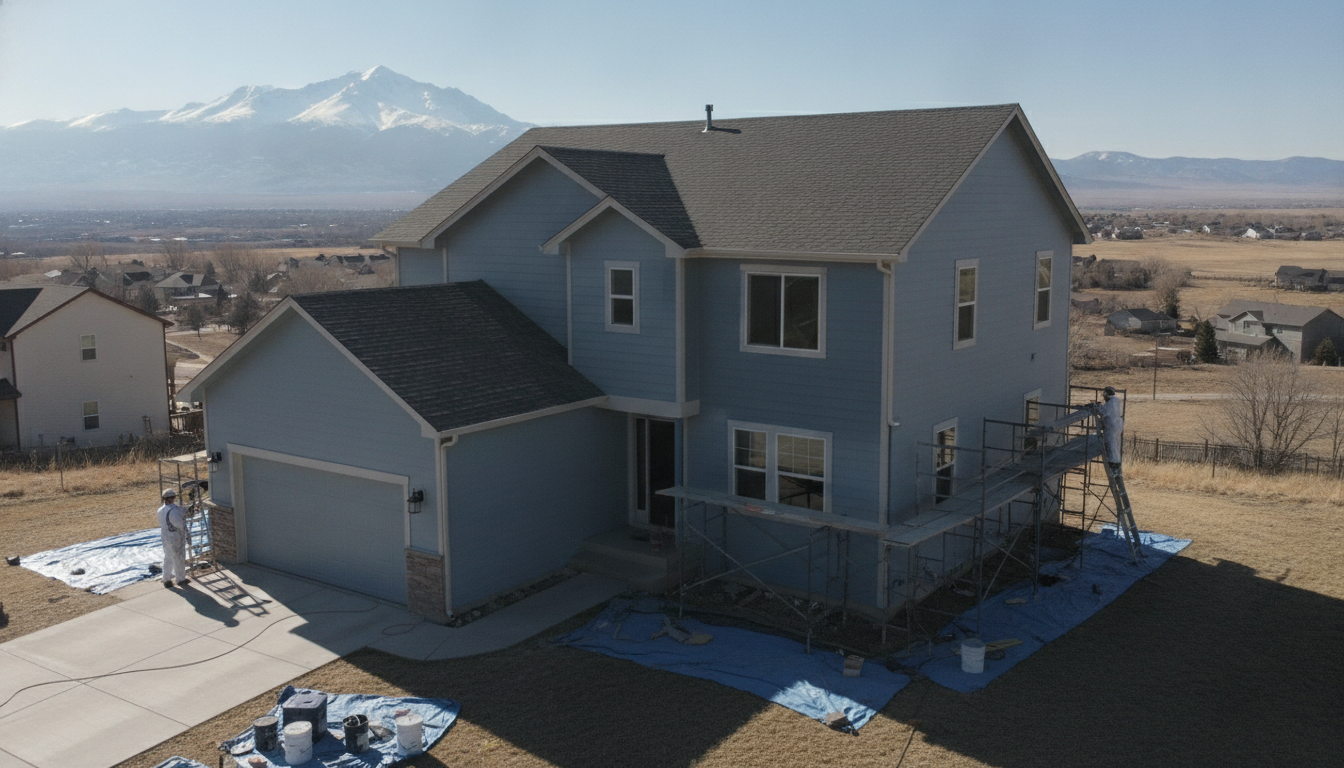
Budgeting for exterior painting in Colorado Springs? Learn the real cost factors—prep, substrate, exposure, repairs—before spring. Free on-site estimates.
If you're already thinking about next spring's exterior repaint, you're ahead of most homeowners — and that's the right instinct. Fall is when a lot of Colorado Springs homeowners start pricing in exterior work, well before the first estimate ever gets scheduled. We won't put a number on a repaint here, because nobody honest can do that without seeing the house. What we can do is walk through what actually drives the cost up or down, so you know what you're looking at when estimates start coming in.
Prep Is Most of the Job
The paint itself is rarely the expensive part of exterior painting in Colorado Springs. What costs time — and therefore money — is everything that happens before a drop of coating goes on the wall. Washing the house down first isn't optional. Front Range exteriors collect chalked paint, plains dust, pollen and mildew on shaded sides, and coating over any of that means the paint won't bond, no matter how good the product is. After the wash comes scraping, sanding, feathering loose edges, and sealing the openings — nail heads, board seams, gaps around penetrations — the step most often skipped and the one that keeps a cosmetic job from turning into a rot problem down the line.
Substrate Condition Changes Everything
Two houses of the same size can carry very different costs depending on what's underneath the old paint. Split trim, soft siding, cracked stucco, or rot behind a downspout all need to be repaired before coating — painting over a failed substrate buys you a season, maybe less, and then you're paying for the same job twice. This is especially common with composite hardboard siding on homes built between the late 1970s and the 1990s across the Front Range. The cut bottom edge wicks up water over time, the board swells, and the layers start coming apart. It's usually confined to one or two elevations rather than the whole house, but it has to be addressed, not painted over.
Stucco tells its own story. Fine hairline crazing is normal and takes a coating fine. A crack you can get a fingernail into is a water path. Horizontal cracks, bulging, or a hollow sound when you tap the wall mean the stucco has lost its bond entirely. Traditional three-coat stucco and EIFS — synthetic stucco over foam — look almost identical from the ground but repair completely differently, which is why a knuckle test matters before anyone quotes the job.
Elevation Exposure Isn't the Same on Every Wall
At 6,000-plus feet, UV load is materially higher than at sea level, and it doesn't hit every wall equally. South and west-facing elevations take far more sun and heat cycling than north and east walls, and they fail years sooner. That's why a proper spec changes by elevation, not just by house — the sunny side may need a different coating class or an extra coat where the old paint is already chalking, while the shaded side might just need a wash and a standard coat. A quote that treats all four walls identically is missing something.
Repairs Belong in the Same Scope
Drywall repair, stucco repair, and siding repair all affect the final cost of an exterior job, and they should be written into the same estimate rather than showing up later as a change order. Recurring cracks — in stucco or drywall — are often movement cracks driven by expansive clay soils across El Paso and Douglas County, or by the very low humidity that dries out framing. A third round of filler on a crack that keeps coming back isn't a repair; it's a delay.
Timing Affects the Job Too
Exterior coatings need surface temperatures above roughly 50°F for the entire cure, not just at application. Colorado Springs routinely swings 30 to 40 degrees between afternoon and overnight, so a coating applied on a warm October afternoon can still fail if that night drops below freezing. That's part of why exterior work here runs roughly April through October, with late spring and early fall as the sweet spot — and why homeowners in Woodland Park and Teller County, sitting above 8,000 feet, work with an even shorter window than Pueblo, which sits lower and holds its exterior season longer.
Comparing Quotes
When you're comparing two painting quotes, ask what's included in prep, whether repairs are itemized in the scope or promised as an add-on later, and whether the spec changes by elevation. A quote that's silent on all three is missing the parts of the job that determine whether the paint lasts five years or ten.
Happy Painting handles interior painting, exterior painting, commercial painting, and apartment or HOA exterior repaints across Colorado Springs, Monument, Castle Rock, Black Forest, Falcon, Fountain, Woodland Park, and Pueblo — along with the stucco, siding, and drywall repair that goes underneath. Estimates are free, on site, and come with no obligation. If you'd like Josh to take a look before spring scheduling fills up, we're happy to take your details now.
Frequently Asked Questions
How often does a house need to be repainted in Colorado?
Roughly every 5 to 10 years here, though it depends more on the wall's exposure and substrate than on the calendar. The real test is the surface itself — if the sunniest elevation leaves a fine powder on your hand, the coating is chalking and won't hold a new coat until it's washed off first.
Why does exterior paint chalk and fade faster here than other places?
Elevation is the main reason. Above 6,000 feet, UV exposure is materially higher than at sea level, and south and west-facing walls take the brunt of it. A 100% acrylic coating stays flexible through our daily temperature swings and holds color better against that UV load than cheaper vinyl-acrylic blends, which chalk and fade years sooner on exposed elevations.
Should I paint before hail season or wait until after?
El Paso County is one of the most hail-prone corridors in the country, and damage to siding or trim doesn't always show up until the following season. There's no way to guarantee a coat outlasts a hailstorm, but starting with sound substrate and proper prep gives it the best chance, and any hail damage found during the job gets addressed as a repair rather than painted over.